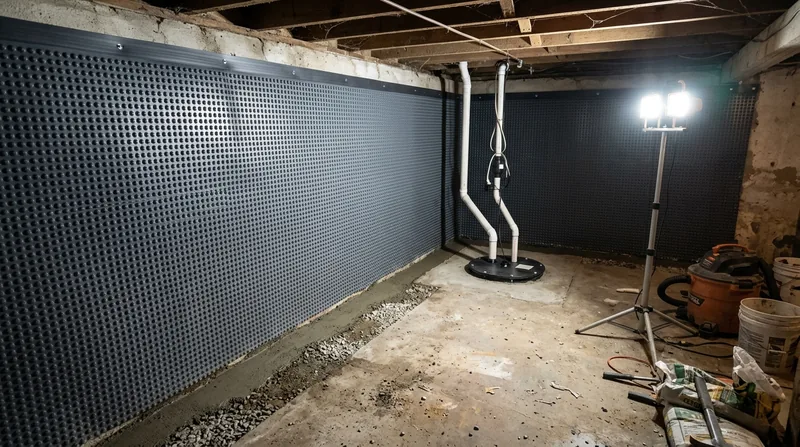




Basement Waterproofing in Fayetteville is not a copy-and-paste service here. Most homes in this metro sit on slab or raised floors, and the ones with a true lower level are usually the 1900s-1930s brick and frame bungalows and Foursquares near the historic square and the University of Arkansas, many with a small full basement or a partial cellar tucked under the front rooms. The ground under those walls is chert-rich clay residuum sitting on cracked limestone, and after a heavy spring storm that water finds every joint and seam it can. We trace the actual water path instead of guessing, then build the system that fits the house and the hill it sits on. For the few homes here with a full lower level, that means interior drain tile, a properly sized sump pump, wall treatment, and a vapor barrier working together. Start with a free basement inspection and we will tell you plainly whether you have a crack problem or a hydrostatic pressure problem.
Why Basement Waterproofing Matters in Fayetteville's Clay and Karst Ground
Fayetteville sits on a karst layer with sinkholes and springs, and the clay residuum above it holds water like a sponge before letting it go all at once. That is why a wet basement here often shows up suddenly after a storm rather than slowly over months. The failure mode that dominates in this city is spring storm runoff driving water against the foundation and through wall base seams, floor cracks, and cold joints, not a rising regional water table. When the ground is saturated, hydrostatic pressure pushes against the wall and the water takes the easiest path in.
- Water seeps at the wall base after heavy rain and leaves a dark tide line on the block.
- White efflorescence blooms on the masonry as moisture migrates through and evaporates.
- Floor cracks weep and the sump basin fills faster than the pump can clear it.
- A musty basement smell builds because moisture is trapped against the wall and floor.
- Older bungalows near the square show parging that has spalled off and exposed the brick underneath.
Each of those symptoms points to a different fix, and treating the wrong one wastes money. A simple crack that is not under pressure may only need sealing, while a wall that weeps along its whole base needs drainage.
Key info: A 1920s Foursquare off Arkansas Avenue had water crossing the cellar floor every March. The wall itself was sound. The problem was a downspout dumping at the corner and grading that sloped back toward the house, so we corrected the grade, extended the discharge, and sealed the base joint. No excavation needed.
For official guidance on what work requires a permit, check the City of Fayetteville building department at fayetteville-ar.gov before any structural or drainage alteration begins.
How We Waterproof a Fayetteville Basement, Step by Step
We start below grade and work outward, because the water path tells us which system makes sense. On the 1990s-2020s subdivisions in Springdale, Johnson and Farmington, that often means slab-edge drainage and exterior grading on the slopes. On the older homes near the university, it usually means an interior perimeter drain and wall treatment. We do not sell exterior excavation when an interior drain tile system is the better answer, and we say so on the first visit.
- We inspect the basement, the exterior grade, the downspouts, and the visible crack pattern, then note where water actually enters.
- We identify whether the source is hydrostatic pressure, a failing footing drain, or surface water running along the foundation.
- We recommend the least invasive system that solves the real problem, and we explain the tradeoffs in plain terms.
- We install interior drain tile in a gravel bed along the footing, tied into a sump basin with a check valve and a discharge line that moves water away from the house.
- We treat the walls with a vapor barrier or dimple board where moisture is migrating through the masonry, and we seal active cracks with epoxy or polyurethane injection.
- We test the system with water before we backfill or close up, and we walk you through the discharge and pump operation.
Every job ends with a clear explanation of what was done, why, and what to watch for in the next storm season.
Key info: A walkout ranch in Tontitown had a damp lower wall and a sump pit that ran constantly in April. We installed an interior drain tile system with a new sump basin and a battery backup, and the pit now cycles only during real storms.
Waterproofing Methods We Use and When Each One Fits
Not every wet basement needs the same approach, and the table below shows how we match the method to the failure we find. We choose based on where the water enters, how much pressure is behind it, and what the foundation can tolerate.
| Approach | Description | Best for |
|---|---|---|
| Interior perimeter drain | Gravel bed and perforated tile along the footing inside the basement, tied to a sump basin. | Wall base seepage under hydrostatic pressure. |
| Exterior waterproofing | Membrane and dimple board applied to the outside wall, with footing drain replacement. | Failed original coating and accessible foundation walls. |
| Epoxy or polyurethane injection | Injection ports set into a crack and filled under pressure to seal it from the inside. | Active cracks in poured concrete walls. |
| Sump pump and vapor barrier | Sized pump, check valve, discharge line, and wall vapor barrier to control moisture. | Lower levels with recurring damp and a failing pump. |
We will tell you when simple crack sealing is enough, and when the real problem is pressure that needs drainage instead.
Basement Waterproofing Cost in Fayetteville: What to Expect
Most basement waterproofing work in this market starts from $2,500, and that figure covers a defined scope such as crack injection, base joint sealing, or a small drainage correction. The number moves up with the length of wall that needs drain tile, whether a new sump basin and pump are part of the job, and how much exterior grading or downspout work is needed to stop the water at the source. Access matters too, because a tight cellar under a 1920s bungalow takes more labor than an open walkout pad in Farmington. We publish a fuller breakdown on our pricing page, and we always recommend getting two or three written estimates so you can compare scope, not just the bottom line. A cheap quote that seals a crack without addressing the pressure behind it will not hold through the next spring.
How to Choose a Basement Waterproofing Contractor Near Me in Fayetteville
Ask for proof of licensing and insurance before anyone touches your foundation, and get a certificate of insurance sent directly from the carrier if you want to verify it. Get at least two written estimates that spell out the scope, the materials, and what happens if the water returns. Ask for references from jobs in Fayetteville or the surrounding towns, and call them. If structural repair, egress window cutting, or a change to the sump discharge connection is part of the plan, confirm who pulls the permit, because thresholds vary by jurisdiction and the local building department has the final word. If you are in an HOA, check the rules on exterior grading and discharge before work starts. Reach out through our contact page and we will walk you through the process without pressure.
Basement Waterproofing Near Me: Local Conditions That Change the Plan
What works in a slab ranch on the south side of Fayetteville is not what works in a walkout on a slope in Cave Springs or Elkins. The chert clay and cracked limestone here send water to the joints fast, so a discharge line that dumps too close to the foundation simply returns the water you just pumped out. We size the discharge and the grade to move water well away from the house, and we check window wells in the older homes where they collect runoff. Homes in West Fork and Lincoln on heavier clay often need a longer drain run than the lot first suggests. A quick look at our foundation crack repair service shows how we handle the cracks that come with that movement. If you want a straight answer on your own basement, call (479) 318-0517 and we will schedule a look.
Basement Waterproofing in Fayetteville: Pricing Guide
| Service | Price | Details |
|---|---|---|
| Crack injection and base joint sealing | Starting at $2,500 | Covers epoxy or polyurethane injection and sealing; price rises with crack length and number of ports. |
| Interior drain tile and sump system | Starting at $4,800 | Includes perimeter drain, gravel bed, sump basin, pump, and discharge; wall length drives the total. |
| Exterior waterproofing with membrane | On estimate | Needs an on-site look at access, footing drain condition, and how much wall is exposed. |
| Sump pump replacement or battery backup | Starting at $850 | Covers pump swap, check valve, and discharge check; basin condition and backup type affect the figure. |
| Travel | Included | In Fayetteville and surrounding areas, no separate call-out or mileage fee. |
| Estimate | Free | Response within 24h at (479) 318-0517, no obligation to book. |
Indicative pricing, the exact cost depends on square footage, finish, and site access. Free personalized estimate within 24h at (479) 318-0517.


