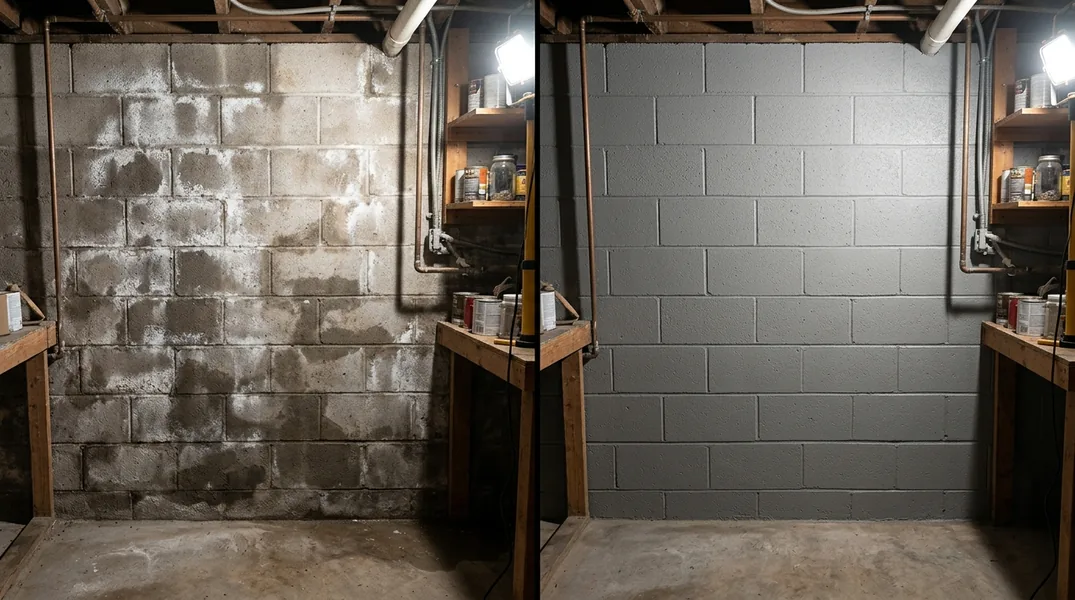
Why Spring Storms Hit Fayetteville Basements So Hard
Spring in Northwest Arkansas brings a familiar pattern: warm, moist Gulf air collides with cooler air from the north, and the result is days of heavy rain, frequent thunderstorms, and the occasional severe outbreak. For homeowners in Fayetteville, that means one thing for the ground around the foundation: saturation. When the soil can no longer absorb water, it has to go somewhere, and all too often it goes into basements and crawl spaces.
The terrain makes it worse. Fayetteville sits in a region of rolling hills, steep lots, and clay-heavy soils that drain slowly. Water running downhill from uphill neighbors, streets, and driveways concentrates against foundation walls. Add in the spring water table, which rises as the ground stays wet for weeks, and you have hydrostatic pressure pushing moisture through even tiny cracks and pores in concrete. That is why so many homeowners discover Basement Waterproofing problems in April and May rather than in the dry summer months.
How Storm Runoff Finds Its Way Into Your Basement
Water is patient. It seeps through hairline cracks in poured concrete, through the mortar joints of block walls, and through the cove joint where the floor meets the wall. It wicks through porous concrete and finds gaps around utility penetrations, window wells, and older drain tiles that have long since clogged with silt. In many Fayetteville homes, the culprit is not a single obvious leak but a combination of small entry points that only reveal themselves during sustained spring rain.
Gutters and downspouts that discharge too close to the house are a common aggravating factor. So are negative grades, where the soil slopes back toward the foundation instead of away from it. Driveways, patios, and sidewalk slabs can channel runoff directly against a wall. Once water reaches the foundation, hydrostatic pressure builds and pushes it indoors. That pressure is the reason a basement that stayed dry for years can suddenly start weeping after one particularly wet spring. If you are seeing damp walls, efflorescence (the white powdery residue), or water on the floor, it is worth getting a free estimate before the next round of storms arrives.
Flood Prevention Starts Outside: Grading, Gutters, and Drainage
Before anyone talks about interior systems, a good contractor looks at what is happening outside. Flood prevention for a Fayetteville home usually begins with grading and drainage. The ground should slope away from the foundation at roughly a six-inch drop over the first ten feet. Downspouts should discharge several feet from the wall, ideally into splash blocks, buried leaders, or a dry well. Window wells need covers and proper drainage. These are inexpensive fixes, but they are often the difference between a damp basement and a dry one.
Where surface grading is not enough, Exterior Basement Waterproofing can address the problem at its source. That typically involves excavating around the foundation, repairing or installing drain tile, applying a waterproof membrane to the wall, and backfilling with gravel and soil that sheds water rather than holding it. It is a bigger project, but for homes with chronic seepage or significant hydrostatic pressure, exterior work is often the most durable solution. Homeowners in nearby Springdale and Farmington face the same soil and slope conditions, so the same principles apply.
Interior Solutions for a Wet Basement
Not every home needs excavation. In many cases, an Interior Drain Tile System is the practical answer. This involves removing a narrow strip of the basement floor along the perimeter, installing perforated pipe in a gravel bed, and connecting it to a sump pump that moves water out and away from the house. The system relieves hydrostatic pressure beneath the floor and directs water to a safe discharge point. It works well in finished and unfinished basements alike and can usually be installed without disturbing the exterior landscaping.
Interior systems are especially useful in older Fayetteville homes where exterior excavation is impractical due to mature trees, decks, or tight lot lines. Combined with a vapor barrier and proper sealing of cracks and cove joints, they form a reliable defense against Northwest Arkansas basement water during the wettest months. The key is to size the system correctly for the home and to make sure the sump pump has backup power, because spring storms are also power-outage season.
Foundation Waterproofing Near Me: When to Call a Professional
Some homeowners can manage seasonal dampness with gutters, grading, and a dehumidifier. But there are clear signals that it is time to call a professional. Standing water after storms, repeated efflorescence, mold or musty odors, bowing or cracking walls, and doors that stick as the ground swells are all signs that water is actively affecting the structure. Ignoring them rarely saves money; foundation repairs are far more expensive than prevention.
This is where Foundation Waterproofing comes in. A thorough inspection identifies where water is entering, how the soil and slope are contributing, and which combination of interior and exterior measures makes sense for the home. Because every property is different, a good contractor will explain options clearly and provide transparent pricing before any work begins. If you are searching for foundation waterproofing near me in Fayetteville, start with a conversation about your specific symptoms and drainage patterns. Call Fayetteville Waterproofing at (479) 318-0517 to schedule an assessment before the next spring system rolls through.
Building a Year-Round Defense Against Seasonal Water
Spring storms are predictable in Northwest Arkansas, and so is the damage they can cause to an unprotected basement. The most effective approach combines smart surface drainage with a proven subsurface system and regular maintenance. Clean gutters before storm season, check that the sump pump is working, and watch for new cracks or damp spots after heavy rain. Small issues caught early are far cheaper to fix than a flooded basement.
Homeowners who invest in a proper waterproofing strategy often find that the basement becomes usable space rather than a source of worry. Whether the solution is exterior drainage, an interior drain tile system, or a combination of both, the goal is the same: keep water moving away from the foundation and relieve the pressure that forces it indoors. If you are ready to protect your Fayetteville home this spring, reach out for a free estimate and get a plan tailored to your property.
Looking for a professional basement waterproofing contractor in Fayetteville? Fayetteville Waterproofing responds fast for all your basement waterproofing needs.
Get a Free QuoteOur services: Basement Waterproofing · Interior Drain Tile System · Exterior Basement Waterproofing